

How Can You Counteract the Impact of Inflation?
“Inflation is as violent as a mugger, as frightening as an armed robber and as deadly as a hit man.” Ronald Reagan
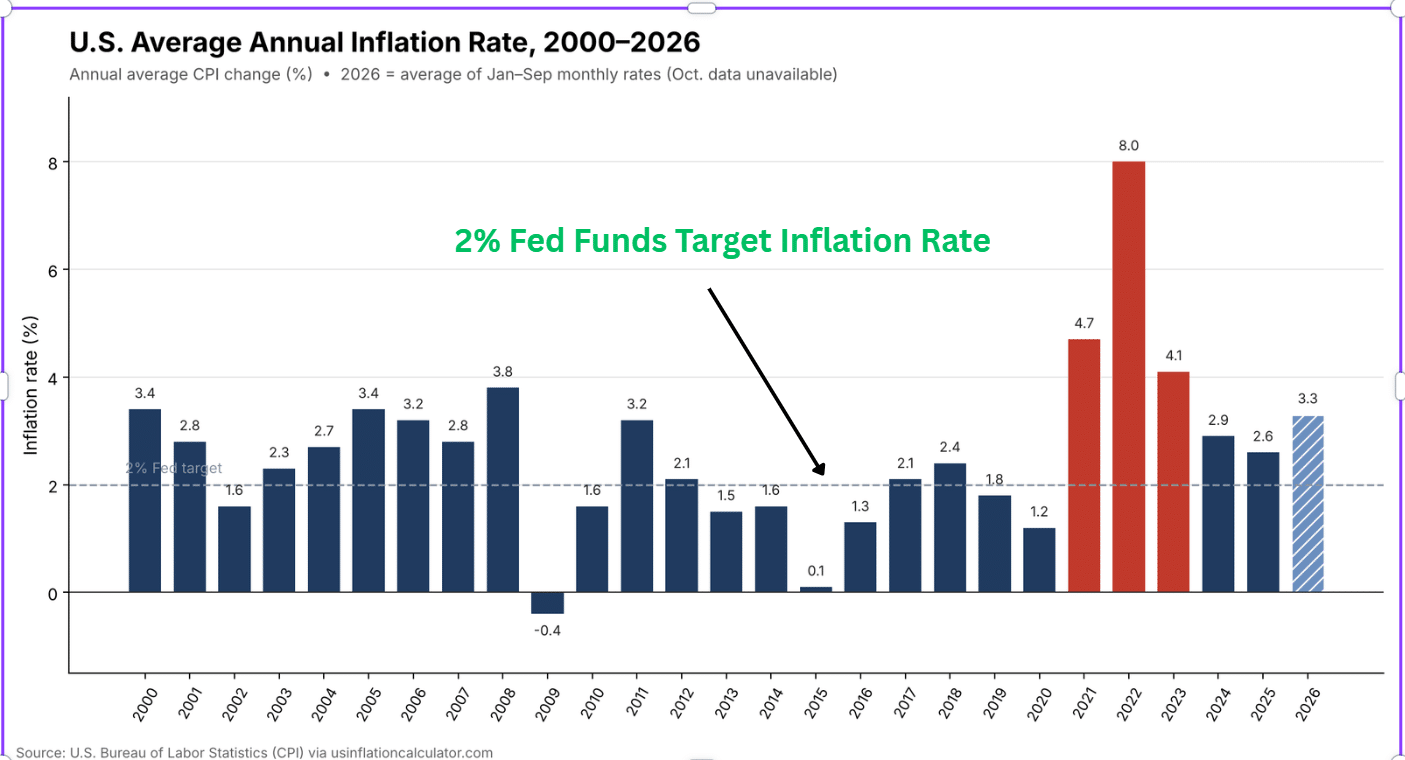
From 2008 through 2020, annual inflation ranged from a high of 3.8% in 2008, when oil prices spiked ahead of the financial crisis, to a low of -0.4% in 2009. After the COVID-19 pandemic and its supply chain shortages, inflation surged to 8.0% in 2022, its highest annual average since 1981. It cooled to 4.1% in 2023, 2.9% in 2024 and 2.6% in 2025, but it has picked up again: inflation has averaged 3.3% over the first nine months of 2026. Consumers are still reeling from higher prices and reduced purchasing power.
Now is the time to learn how to prepare for inflation and how you can counteract the impact of inflation.
Find out what causes inflation to rise and how to fight inflation.
This article may contain affiliate links which means that – at zero cost to you – I might earn a commission if you sign up or buy through the affiliate link.
The most commonly cited measure of inflation in the United States is the CPI. It’s a measure that calculates the weighted average prices of a basket of consumer goods like transportation, food, medical care, education, recreation and more.
Preparing for Inflation – First Understand its Causes
What causes inflation?
Inflation is an ongoing rise in the general level of prices, which means each dollar buys less than it did before. It is often explained as too much money chasing too few goods and services, and faster growth in the money supply is a major driver over time.
The main causes of inflation are:
- The economy is growing too quickly and there is greater demand for goods and services, than there is supply.
- Supply is reduced and there is greater demand for fewer goods, thus driving up prices.
- The government increases the money supply, so the dollar is worth less, due to a greater supply of money in the economy.
- Higher wages, which increase firms costs and consumers disposable income, thereby boosting demand and driving up prices.
Simply put, inflation causes each dollar to be less valuable than before and purchase fewer goods and services than in the past.
During the recent Corona Virus pandemic, global trade was interrupted, and production for many goods and their inputs was stalled. Production slowed across the globe, as did international transportation. This caused bottlenecks in supplies and shortages of important materials and products. As supply chains withered, demand remained steady causing prices, and subsequently inflation to increase.
Inflation has averaged 3.3% so far in 2026 (January through September; October’s annual rate is unavailable because of the 2025 government shutdown), and the pain is concentrated at the pump. Gasoline prices rose 37.4% in the 12 months ending October 2026, while food prices rose 2.5% in the 12 months ending September. When you break inflation into its components, energy stands out as a major culprit for commuters and those who make their living driving. Overall, goods and services cost more, and the dollar buys less than it did several years ago.
Using the latest U.S. government CPI data from usinflationcalculator.com, an item that cost $100 in 1980 would cost about $409.60 in October 2026, a 309.6% price increase.
You need to learn how to prepare for inflation at home, while shopping and traveling.
The first two decades of the 2000’s (excluding 2008) spoiled us, but now we are back to a higher inflation period. In this article you will learn how to deal with inflation and grow your money by saving and investing for the future.


What is the Consumer Price Index? Making Sense of the CPI
The Consumer Price Index is the most common measure of inflation. It can be calculated several ways: headline CPI includes food and energy costs, while core CPI excludes them. I prefer headline CPI; after all, we all eat and use energy! The most widely used version, the CPI for All Urban Consumers (CPI-U), covers about 93% of the U.S. population. It excludes people living in rural areas, active-duty military and people in institutions such as prisons and hospitals.
Bureau of Labor Statistics – https://www.bls.gov/news.release/pdf/cpi.pdf
The Consumer Price Index is the most common measure of inflation. It can be calculated several ways. One way includes food and energy costs, the other doesn’t. I prefer the CPI that includes food and energy, after all, we all eat and use energy! Ninety-three percent of the CPI reflects urban consumers, the other 7% reflects rural populations, military, the incarcerated, and hospitalized populations.
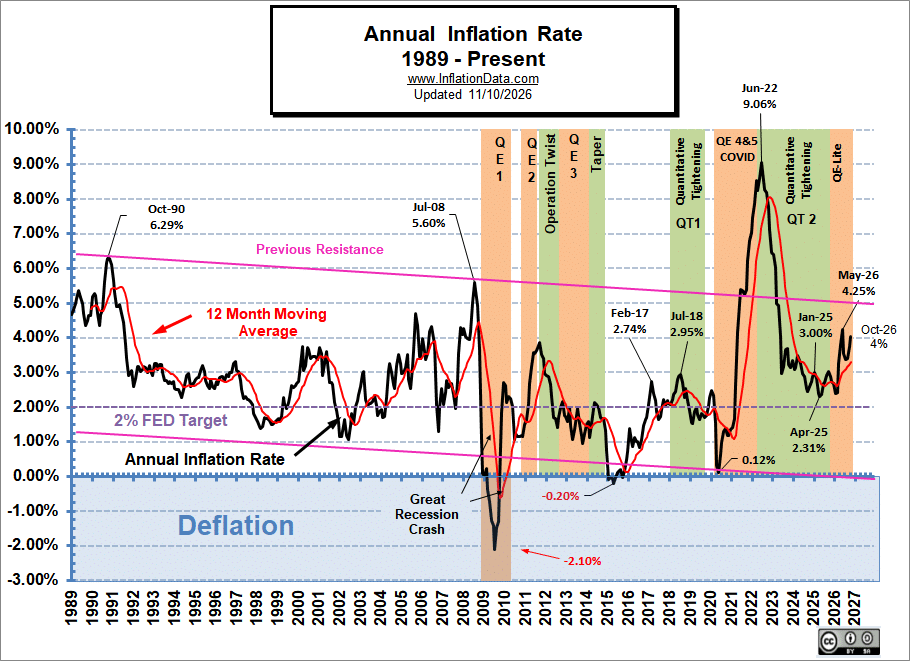
Annual inflation rates are calculated with 12-month data of the Bureau of Labor Statistics Consumer Price Index (CPI).
The CPI covers goods and services from these categories:
- Food and beverages
- Housing
- Apparel
- Transportation
- Medical care
- Recreation
- Education and Communication
- Other
How to Combat Inflation? Understand Your Personal Inflation Rate
Before we get into how to counteract the impact of inflation, inflation hedges and protection strategies, understand your personal inflation rate.
Inflation is personal. If you don’t drive a fuel powered vehicle and live in a warm climate, then oil prices don’t matter too much. If you are single and don’t eat much, then food prices aren’t a big deal. Whereas if you live in NYC, don’t drive and have 4 teenagers, then rent and food inflation will be steep.
Although the published inflation rates are informative, they don’t always apply to your situation.
Ultimately, if you are over age 50, own your own home, aren’t paying for education and have low medical expenses, then you will be less impacted by inflation than someone who consumes from more of the CPI categories.

Unanticipated inflation is inflation that comes in higher than people and businesses expected. It hurts most when the prices of the items you buy most often rise faster than your income.
So, take the published inflation rates with a grain of salt. What you buy and the services that you use, will directly influence your own personal inflation rate.
Source: https://inflationdata.com/articles/charts/annual-inflation/
How to Prepare for Inflation – 10 Tips
It’s not too late to hedge against inflation.
1. How to beat inflation when shopping.
Look for low prices on nonperishables, and stock up. Check sales and apps to find the loss leaders when shopping for things like toilet paper, paper towels, soap products, canned goods, rice, beans, peanut butter and anything that keeps for awile. Shop at discount grocery stores.
When I was a little girl, my mom bought huge amounts of toilet paper, canned goods, and other non-perishable items on sale and stored them in the basement. Although it was annoying to hunt down a roll of toilet paper in the basement, now I totally get it. During times with increasing inflation, buying large quantities on sale was a true inflation hedge!
Don’t forget the towels and sheets during the annual January and August sales. At the end of the season, mark downs are the greatest. And buy electronics near the holidays.
2. How to combat inflation when traveling.
Air and hotel prices are high, unless you spend some time scouring the internet and travel websites for bargains. Place alerts on the air travel routes and airlines that you prefer, to be notified of price drops. Visit “less popular” locations, with lower hotel and meal rates. The shores of Lake Michigan, the Florida and Texas gulfs offer affordable vacation spots.
Get a room with a kitchen and cook some of your meals in your room.
Book vacations off-season, for cheaper rates.
Consider seeking out vacation spots within a reasonable driving distance, to counteract high airline prices.
3. Borrow smart: favor fixed rates when inflation is rising.
Prepare for inflation with responsible borrowing. If interest rates are poised to rise, which often happens when inflation heats up, favor a fixed-rate mortgage or car loan so your payment can’t increase. Fixed-rate debt also gets easier to carry over time, because you repay it with future dollars that are worth less than today’s dollars. If rates decline, you can refinance and secure a lower interest rate.
If rates are expected to decline, an adjustable-rate mortgage (ARM) may let you refinance at a lower rate later, but be aware that ARM payments can rise if rates climb. Just beware of extending the length of the loan when you refinance. A 15-year loan can substantially reduce your total interest payments. First-time homebuyers should look for programs designed to help with down payments and closing costs.
Do not take on credit card debt, regardless of the inflation level. High-interest debt will thwart your quest to build wealth.
4. Gold might be a good inflation hedge.
Although gold doesn’t pay dividends, it is widely considered a sound store of value. From historical times, gold has been revered.

Gold is older than today’s prominent global currencies like the Euro and the US dollar. In fact, gold has preserved wealth for thousands of years. Additionally, gold is less correlated with common asset classes like stocks and bonds. Although there are periods where gold underperforms the stock markets, many like to own a percent of their assets in either gold coins, ETFs or other types of gold assets.
5. The best investments during inflation include stocks that tend to benefit from rising prices.
- Energy – Oil and gas producers tend to profit when fuel prices climb.
- Commodities – Tangible assets have been inflation hedges in the past.
- Real Estate – This inflation hedge will profit from both rising rent payments and appreciation as the property increases in value.
- Hard assets – Gold, silver, platinum and other metals provide a hedge against inflation.
- Materials Companies – The materials sector includes many types of manufacturers including steel, chemical, glass, paper, forest products, mining and more.
- Industrial and Transportation Companies – Transportation companies include airlines, railroads, shipping, and logistics while industrial firms provide products and services for the construction and manufacturing industries.
- Small Caps – These smaller firms are leaner and may profit from rising prices.
- Foreign Companies – Many foreign firms are involved in the industrial and commodities sectors.
6. The best investments during inflation include inflation protected government securities, step up notes and CD ladders.
Look at Government inflation protected bonds such as TIPS and I Bonds. These government offerings are a great tool for protecting your capital against inflation.
Although you typically don’t receive capital appreciation by investing in TIPS and government I Bonds, treasury protected securities increase their payouts or principal based upon the rate of inflation.
That means that your purchasing power will increase along with rising inflation.
Another inflation investment to consider is the step up note. These bonds increase their dividend payments at pre-determined intervals.
CD ladders are a great inflation hedge as well during periods of rising interest rates. Buy CDs, with varying maturities. When one CD comes due, invest the proceeds in a higher yielding CD.
7. Keep investing in the stock market, regardless of the economic scenario.
If history is any guide, the longer your money remains invested, the greater average long-term annual returns you can expect from your stock and bond investments. Keep your investing plan in place during inflationary periods.
When demand for goods and services increases, companies have room to raise prices. As long as wages and costs rise more slowly than prices, corporate profits tend to grow, and stock prices often follow. That isn’t guaranteed, though: in 2022, with inflation averaging 8.0%, the S&P 500 lost about 18%.
Click now to get a low cost plan to cut investment fees to the bone and manage your own investments.
8. Real estate investing is a hard asset that’s easy to invest in.
When inflation hits, real estate prices might rise as well. The opportunities for small and large investors to invest in real estate continues to grow. There are so many ways to invest in real estate:
- Real estate crowdfunding
- Buying real estate outright and either renting or fixing up and flipping
- Investing in real estate investment trusts or REITs
Groundfloor is a real estate debt company that enables investors to “be the bank” and lend to real estate investors. During high interest rate periods, you can enjoy high yields:
Diversyfund offers a range of real estate investing options. Visit their website to learn more.
9. Take a look at commodity funds.
Commodity and natural resource funds can help when inflation is driven by rising raw-material and energy costs. These funds own producers of energy, metals and agricultural products, or track commodity prices directly. Check each fund’s current expense ratio and holdings before you invest, since both change over time.
You may want to look at precious metals and energy ETFs as well.
10. Retirees: consider delaying Social Security to lock in a larger, inflation-adjusted benefit.
If you can hold off until age 70, you’ll lock in your largest monthly benefit. Your monthly Social Security check will be 24% larger at age 70 than if you began taking payments at age 67. In the meantime, consider withdrawing from your IRAs and 401(k) earlier. That can lower your required minimum distributions (RMDs) and taxes in your 70s.
Conversely, if you claim at age 62, your Social Security benefit could be reduced as much as 30%.
Social Security benefits also receive annual cost-of-living adjustments (COLAs), so the larger benefit you receive at age 70 will continue to rise with inflation throughout your life.
FAQ
Stock up on consumables when there are sales. Switch to lower-cost substitutes for necessities, such as generic-brand groceries and meatless meals like pasta or rice and beans. Adjust your lifestyle to spend less. Ask for a raise or look for higher-paying work so your income keeps pace with rising prices. Prepare mentally, too: inflation tends to cool over time, but prices rarely fall back to earlier levels, so plan for a higher cost of living and focus on growing your income and investments.
Stocks in companies that can easily raise prices such as energy, materials and consumer staples firms have historically held up well during inflation. Gold and commodities can also perform well during inflationary periods. Here’s an easy way to invest in Gold. Real estate can also be an inflation hedge. Check out REITs and real estate crowdfunding. TIPS and I Bonds are designed specifically to keep pace with inflation.
How to Prepare for Inflation Wrap Up
When wondering How to Prepare for Inflation, remember to start planning early.
Consider the impact of inflation when spending and investing.
Buy in bulk, when you can.
Take advantage of Government inflation protected securities.
Investing can be a sound inflation hedge. Consider adding real estate to your portfolio. Finally, stock up on staples when prices are low. During times of low inflation, its wise to prepare as unanticipated inflation may crop up when you least expect it.
New and experienced investors will appreciate the M1 Finance investment platform. You get fee-free stock and fund trading as well as cash management, lending and automated portfolio rebalancing. Check it out now!
Related Inflation Investment Articles
- Equity Multiple Review – Real Estate Crowdfunding
- Accredited Investor Opportunities
- FarmTogether vs Acretrader – Which Farm Investing Platform is Best for you
- Fundrise vs Diversyfund vs Groundfloor | Real Estate Crowdfunding for All
- Pros And Cons Of Investing In Inflation
- What Are TIPS Inflation Bonds?
- Vaulted Review-Physical Gold Investment App
- How Much Cash Should I Have On Hand?
*Disclosure: Please note that this article may contain affiliate links which means that – at zero cost to you – I might earn a commission if you sign up or buy through the affiliate link. That said, I never recommend anything I don’t believe is valuable.

8 thoughts on “How to Beat Inflation – 10 Actionable Tips”
O am 73 with lung cancer, wife of 50 years is 71. Own rentals and two homes Al free and clear.
$ in bank
I was thinking of gold & silver?
You thoughts
Hi J, First off, congratulations with rentals and $$ in the bank. I cannot provide investment advice but here are my thoughts. You’ll of course need to speak with your own advisor for financial information, as he or she will be familiar with your financial situation. Gold and silver are stores of value and don’t pay any dividends. If you want to preserve your wealth against inflation, I prefer I bonds and TIPS. You can learn more about these investments at https://www.treasurydirect.gov/. You can also invest in “TIPs” exchange traded funds which are bought through a brokerage account. Here are a few articles on the topic: https://barbarafriedbergpersonalfinance.com/tips-bond-inflation/, https://barbarafriedbergpersonalfinance.com/here-is-a-guaranteed-way-for-your-money-to-keep-pace-with-inflation-part-1/
Very helpful information.
As an editing note, in the second sentence of no. 1, there is a semi-colon where there should be a comma.
Hi Old Professor, Glad you liked the article. I thank you, and so does my Mother, who was a former English teacher :). Thanks for reading, Barbara
The first portion of your comment is not a complete sentence, Old Professor. Why is there a period?
Great post, really insightful.I have to share this because I myself struggled with debt for a long time until I learnt a couple of things from this guy that was literally the game changer for me, highly recommend! also doesnt matter what kind of debt it is this guy has the solution, with the stuff I learnt I wont be getting into debt anytime soon! http://forgetalldebts.com/
1. We are thinking of Splitting our rural house into two STR mixed MTR rentals, that can also be rented as whole house, and buying another in the city with an ADU to rent the ADU after refi of our primary what are your thoughts on this?
2. I will have some liquidity I want returns on and am thing of Groundfloor – do you think this is a good place to start? You mention Diversyfund here.
p.s I am forwarding this article to my daughter great advice!
Hi Meg, If you are up for the effort that accompanies real estate management, ie renting, maintenance, etc., then owning rental real estate has proven to be a good long term investment. I can’t comment on a specific strategy, but in general, diversification of assets, including stocks, bonds, cash, and real estate can lead to long term capital growth. I applaud your ambition and initiative. Keep us posted on your progress.
Comments are closed.