
Are Robo-Advisors Worth It? 5 Myths Busted by an Expert
You must read this article (or watch the video) if you’re considering investing with a robo-advisor.
Robo‑advisors have exploded in popularity over the past decade, yet misinformation still swirls around what they do, who they’re for, and whether they actually work. As someone who has spent years researching, writing about, and personally testing automated investment platforms, I’ve seen the same myths repeated again and again — often by people who’ve never used one.
Today, we’re smashing five of the biggest robo‑advisor myths so you can make smarter, more confident decisions about your money.
This article may contain affiliate links which means that – at zero cost to you – I might earn a commission if you sign up or buy through the affiliate link.
Myth #1: Robo‑Advisors Are Just for Beginners
Many investors assume robo‑advisors are “training wheels” for people who don’t know how to invest. Not true.
Robo‑advisors are built on modern portfolio theory, a framework used by professional wealth managers for decades. They use algorithms to create diversified portfolios, rebalance automatically, and optimize taxes — tasks even seasoned investors appreciate.
I’m an experienced investor and portfolio manager and I use a robo-advisor! Here are the reasons that many investors, both beginners and advanced prefer robo-advisors:
– They prefer hands-off management
-They value low fees compared to traditional advisors
-They prefer rules-based, consistent investing, instead of emotional decision-making
-They want automated tax-loss harvesting
Even high‑net‑worth investors use robo‑advisors as part of a broader strategy. Automation isn’t just for beginners — it’s for anyone who wants efficiency.
Myth #2: Robo‑Advisors Are Basically FREE
Robo-advisors are basically free? No, that is not true. Even if you go with a “no management fee” robo-advisor, you’re going to be paying something. Robo-advisors typically charge lower fees than human financial advisors, but they are not FREE. Some people believe that robo‑advisors are free and thereby discount them as not worth it.
Schwab Intelligent Portfolios doesn’t have a management charge, but they require a percentage of your cash to be held within a money market fund, and they make fees on that, and then Schwab recommends their own ETFs, and make some money on the expense ratios.
There’s no such thing as free investing.
Many robos, like Wealthfront and Betterment charge 25 basis points or 0.25% of your total investment. That equates to $2.50 for a portfolio worth $1,000. Certainly, that’s cheaper than 1% charged by a human-only financial advisor.
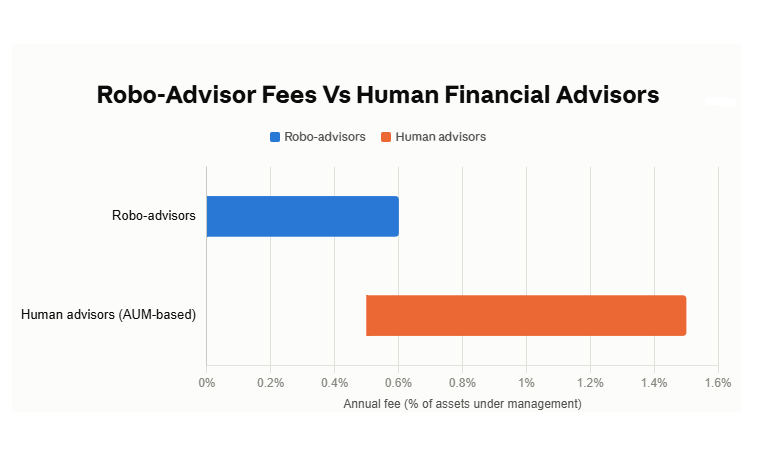
So robo advisors aren’t free, but in most cases they’re less expensive than paying for a full-service financial planner.
The bottom line is, robo-advisors are cheaper than a traditional advisor but they’re not free.
Pro Tip – Whenever you sign up for any type of financial service, whether it be a robo-advisor or a full-service financial advisor, understand the fees you are paying because – fees are important. The higher the fees, the less money going into the actual investment.
Myth #3: Robo‑Advisors Are All Basically the Same
Critics often claim robo‑advisors give everyone the same cookie‑cutter portfolio. But today’s platforms are far more sophisticated. Practically every robo-advisor has a niche, and very few of them are the same.
For example, Wealthfront, has the typical robo-advisor, with a diversified portfolio of low-cost index ETFs, in line with your risk tolerance. But they also offer ways to customize the portfolio by adding your own ETFs. Let’s say you think healthcare will outperform, so you add a healthcare ETF to your existing robo portfolio. There’s also a commission-free stock trading option at Walthfront. They have direct indexing, and a multitude of other features and investment options.
Betterment has a several tiers; basic automated investing and premium for access to CFP financial advisors. Fidelity Go manages your money for free up until your portfolio is valued at $25,000. After that, you get access to a financial coach for a small asset management fee.
Ellevest has wealth management designed for women with various services and pricing tiers. Zacks Advantage marries the robo-advisor concept with active management, based upon their well-regarded research.
Ultimately, all robo-advisors are not the same. Check out my YouTube channel for various reviews and investment wisdom.
The best robo-advisor for you depends on your situation and what you’re looking for.
Myth #4: Robo-advisors Can’t Handle a Market Crash
Everyone is stressed when there is a market crash. I’ve been investing since the 1980s and invested through roughly four major and a multitude of minor market crashes. It is always nerve-racking. But, the key is not to act on your anxiety. Selling during a downturn is among the best ways to lock in losses, and miss future gains, when the market rebounds.
A robo-advisor might be your best answer when the stock market crashes, because it won’t panic sell and will follow the investment plan.
This is typically the best advice during a market crash. With the exception of the 2020 dot-com bubble bursting when stocks took a major fall, for three years and took roughly 10 years to get back to even, most market crashes are short-lived. If you try timing the market, you’ll likely lower your over all returns. Research has shown that staying with your plan during a market crash, yields the best returns, and robo-advisors are designed to follow the plan.
Robo-advisors are really good if there is a market crash. But, you might be missing some hand holding from an advisor. If you need a personal touch, you might consider a hybrid robo-advisor that provides access to human financial planners. Fortunately, many robo-advisors offer financial planner access such as Schwab Intelligent Portfolios Premium, Ellevest, Betterment Premium and more.
Myth #5: You Can’t Trust an Algorithm with Your Money
This is just more emotion than fact.
Many people feel safer with a human, but the fact is, many financial planners are also using automated investment tools, to craft client portfolios.
Most robo-advisors are built on well-established, evidence-based investment strategies. The majority of robo-advisors use low-cost diversified index fund investing and strategic rebalancing. these are the same principles that are used by most human advisors.
The algorithm isn’t going off the rails, making crazy investment decisions. And nearly every robo-advisor I have reviewed and investigated have human investment professionals that oversee the investment decisions and algorithm.
So, a robo-advisor isn’t inherently more or less trustworthy than a human. What matters is, is the strategy behind that robo-advisor. The key when choosing a robo-advisor is to determine if their strategy, offerings, and fees are in line with what you’re seeking.
Why Robo‑Advisors Work
Robo‑advisors succeed because they remove the biggest obstacles to investing:
– Emotions – algorithms don’t panic
– Rebalancing is automatic – keeping portfolio volatility in a manageable range
– Complexity – no need to pick stocks, bonds or funds
– High fees – robo fees and fund expense ratios are typcially lower than those of typical financial advisors
– Time – automation frees your time from portfolio management
If your goal is long‑term wealth building, robo‑advisors offer a simple, low fee, disciplined investment approach.
Robo-advisor Myths Wrap Up – Automation is Your Ally
Robo‑advisors aren’t perfect — no investment tool is. But they’re one of the most efficient, cost‑effective ways to build wealth over time. They simplify investing, reduce emotional mistakes and apply proven investing strategies consistently.
Consider a robo if you’re seeking lower fee investment management. If you choose a robo-advisor with limited human advisor access, you can add guidance tailored to your specific needs: a robo‑advisor for portfolio management and a human advisor for complex planning. Hire the professionals you need for estate and tax planning. And if you have detailed investing questions, hire a fee-only financial advisor on a fee-for-service basis. It’s not either/or — it’s about choosing the right tool for the job.
The myths surrounding robo‑advisors often come from misunderstanding or outdated assumptions. Once you look at the facts, it’s clear: robo‑advisors are a powerful tool for investors at every level.
Related
The Truth About The 401K – Myths Exposed
Robo Advisor Pros and Cons – The Definitive Answer
What Is An ETF – And Why Are They The Easiest Way To Invest?
Disclosure: Please note that this article may contain affiliate links which means that – at zero cost to you – I might earn a commission if you sign up or buy through the affiliate link. That said, I never recommend anything I don’t believe is valuable.
